

Why Choose Eclipse Waste Management for Dumpster Rentals?
Eclipse Waste Management focuses on clear service, local knowledge, and predictable pricing to keep residential cleanouts and renovations on track. Homeowners rely on us for:
- Local Las Vegas service–A locally based team that understands neighborhood access issues, HOA considerations, and city placement rules that affect residential dumpster rentals.
- Fast delivery and reliable pickup–Prompt scheduling helps keep home projects moving, whether you need next-day delivery or timely removal once the job is finished.
- Flat-rate, upfront pricing–Clear pricing that explains what is included, helping homeowners budget confidently and avoid unexpected charges.
- Practical guidance from an experienced team–Support with choosing the right dumpster size, understanding weight limits, and avoiding restricted materials that can lead to delays or added fees.
With Eclipse, Las Vegas homeowners can expect an unmatched rental experience from delivery to pickup.
Why Homeowners Rent Dumpsters in Las Vegas
Homeowners in Las Vegas rent dumpsters when project debris exceeds the capacity of standard curbside pickup. A residential roll-off container offers an efficient way to manage large volumes of waste on-site, eliminating the need for multiple trips to a transfer station or landfill.
Home Renovations and Remodeling
Kitchen and bathroom updates, flooring replacements, and roofing jobs produce significant amounts of bulky waste. Materials like drywall, old tile, cabinets, and shingles can quickly clutter a workspace. Having a dumpster nearby keeps your home safe and allows your project to stay on schedule by providing an immediate disposal area for construction materials.
Major Property Cleanouts
Whether you are clearing out a garage, purging an attic, or managing an estate, large-scale decluttering often reveals years of accumulated items. These projects typically generate more furniture and household junk than local trash services will accept. A temporary rental allows you to remove all unwanted items at once, making the process faster and less stressful.
Landscaping and Exterior Projects
Upgrading your outdoor space often involves removing heavy or high-volume materials. We provide containers for yard waste, such as tree branches and shrubs, as well as debris from fence removals or patio demolitions. Because green waste and soil can exceed weight limits for standard bins, a dedicated dumpster is the most effective way to handle exterior cleanup.
HOA Compliance and Neighborhood Standards
Many neighborhoods in the Las Vegas Valley have strict rules regarding debris containment and project timelines. Renting a dumpster helps you stay compliant with local HOA requirements by keeping waste out of sight and contained in one professional bin. This approach minimizes the visual impact on your neighborhood while you complete your home improvements.
Determining What Dumpster Size or Type You Need
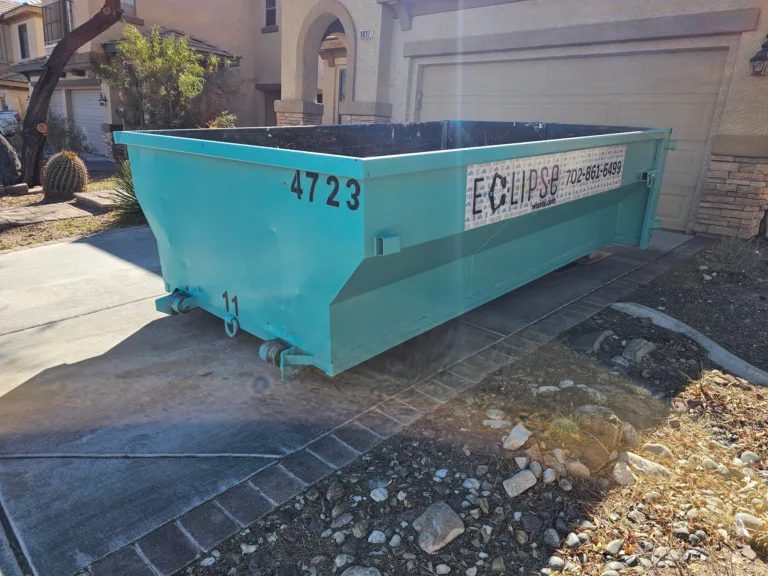
Choosing the right dumpster size is one of the most important decisions homeowners make when renting a dumpster. A container that is too small can lead to overage fees or the need for a second rental, while a dumpster that is too large may take up unnecessary space. Understanding how residential dumpsters are sized and used helps you match the container to your specific project.
Common Residential Dumpster Sizes (10, 15, 20, and 30 Yards)
Dumpster sizes are measured in cubic yards, which describe volume rather than weight. For homeowners, the most common options include:
- 10-yard dumpsters are typically used for small cleanouts, minor bathroom remodels, or light yard debris. They hold roughly three pickup truck loads of material.
- 15-yard dumpsters offer a balance between size and footprint, making them a popular option for moderate cleanouts or small renovation projects.
- 20-yard dumpsters are well-suited for larger remodels, flooring replacement throughout a home, or roofing projects on mid-sized houses.
- 30-yard dumpsters are generally reserved for major renovations, whole-home cleanouts, or large construction projects that generate significant debris.
When to Choose a 15-Yard Dumpster
A 15-yard dumpster is often the right choice when a project produces more waste than a small container can handle but does not require a full-size construction dumpster. Homeowners commonly use this size for single-room remodels, garage cleanouts, or replacing fixtures and cabinets. It provides flexibility without taking up as much driveway or street space as larger options.
When a 20-Yard Dumpster Is the Better Option
For many homeowners, a 20-yard dumpster is the most versatile choice. It works well for kitchen remodels, carpet or flooring removal across multiple rooms, and roofing projects where old shingles and underlayment add up quickly. If a project involves demolition materials plus bulky household items, sizing up to a 20-yard container can help avoid overfilling.
Roll-Off vs. Front-Load Dumpsters
Most residential projects use roll-off dumpsters, which are delivered temporarily and removed once the project is complete. These containers are ideal for renovations and cleanouts because they allow walk-in loading and hold larger debris. Front-load dumpsters are typically used for ongoing commercial trash service and are rarely the right fit for short-term residential needs.
How to Estimate the Right Size for Your Project
Estimating dumpster size starts with the project’s scope. Consider how many rooms are involved, the type of materials being removed, and whether items are bulky or heavy. Construction debris, roofing materials, and dirt take up space quickly and add weight. When in doubt, choosing the next size up is often more cost-effective than risking overflow, delays, or additional rentals.

What You Can and Cannot Put in a Dumpster
Knowing which materials are allowed in a residential dumpster is essential to avoid delays, additional fees, or rejected loads. While dumpsters are designed to handle a wide range of household and renovation debris, local disposal rules place limits on certain items for safety and environmental reasons. Reviewing these guidelines before loading the dumpster helps keep your project on schedule.
Materials Typically Allowed
Most residential dumpster rentals can accept common household and construction-related waste, including:
- Household junk such as old clothing, toys, boxes, and general clutter
- Furniture, including couches, mattresses, tables, and chairs
- Construction and renovation debris, like drywall, wood, tile, cabinets, and flooring
- Yard waste, including branches, leaves, shrubs, and small amounts of soil
These materials make up the bulk of debris from home cleanouts, remodels, and landscaping projects. Placing items evenly inside the dumpster and keeping them below the fill line helps ensure safe transport and proper disposal.
Items Prohibited by Las Vegas Waste Restrictions
Certain materials are not allowed in dumpsters due to environmental regulations or disposal facility rules. Common prohibited items include:
- Hazardous waste such as paint, solvents, fuels, and automotive fluids
- Electronics, including televisions, computers, and monitors
- Tires and automotive parts
- Chemicals, batteries, and pressurized containers
Placing prohibited items in a dumpster can result in additional charges, rejected loads, or the need to unload and separate materials before pickup.
Special Disposal Requirements for Restricted Materials
Items that cannot go into a dumpster often require separate handling. Electronics may need to be taken to approved recycling centers, while household hazardous waste must be dropped off at designated collection facilities. Planning for these materials prevents last-minute complications during your project.
How to Avoid Additional Fees or Rejected Loads
To avoid issues, keep prohibited materials out of the dumpster, do not overfill beyond the rim, and be mindful of weight limits. When questions arise, confirming disposal rules in advance can help prevent delays and unexpected costs at pickup.
Local Rules Homeowners Must Know in Las Vegas
Local regulations play a significant role in where and how a dumpster can be placed on a residential property. Homeowners who understand these rules in advance are less likely to experience delays, fines, or complaints during their project.
In many cases, placing a dumpster on a private driveway is the simplest option. Driveway placement typically avoids permit requirements and reduces the chance of city enforcement issues. Homeowners should still ensure the surface can support the weight of a loaded dumpster and take steps to protect concrete or asphalt from damage.
City Permits
When a dumpster must be placed on a public street or sidewalk, additional rules may apply. Depending on the location, the city may require a temporary permit, especially if the container blocks traffic flow or pedestrian access. Permit requirements can vary by neighborhood and by whether the home is located within city limits or an unincorporated area of Clark County.
HOA Bylaws
Homeowners’ associations (HOAs) often have their own guidelines separate from city rules. These may include limits on how long a dumpster can remain on-site, restrictions on placement visibility, or requirements for advance notice. Failing to follow HOA rules can result in fines or forced removal, even if city regulations are met.
Safety and Access
Access and safety considerations also matter. Dumpsters should not block mailboxes, fire hydrants, or driveways, and emergency vehicle access should be maintained. Understanding these local considerations helps homeowners schedule dumpster delivery with confidence and complete their projects without unnecessary interruptions.
Understanding Dumpster Rental Pricing in Las Vegas
Dumpster rental pricing can vary based on several factors, and understanding how those costs are calculated helps homeowners plan more accurately. While flat-rate pricing simplifies budgeting, the final cost still depends on the dumpster size, how long it is kept on-site, and the type and weight of the debris being disposed of.
How Dumpster Sizes Affect Cost
Dumpster size is one of the biggest pricing drivers. Smaller dumpsters generally cost less because they hold less material and stay within lower weight thresholds. Larger dumpsters cost more upfront but can be more economical for projects that generate significant debris. Choosing the right size reduces the risk of paying for a second rental or overage fees later.
Rental Period Length
Most residential dumpster rentals include a standard rental period, often measured in days rather than hours. Short projects, such as garage cleanouts, may take only a few days, while remodels and roofing projects usually require a longer window. Keeping a dumpster beyond the included rental period can result in daily extension charges, so estimating your timeline in advance helps control costs.
Weight Limits and Overage Fees
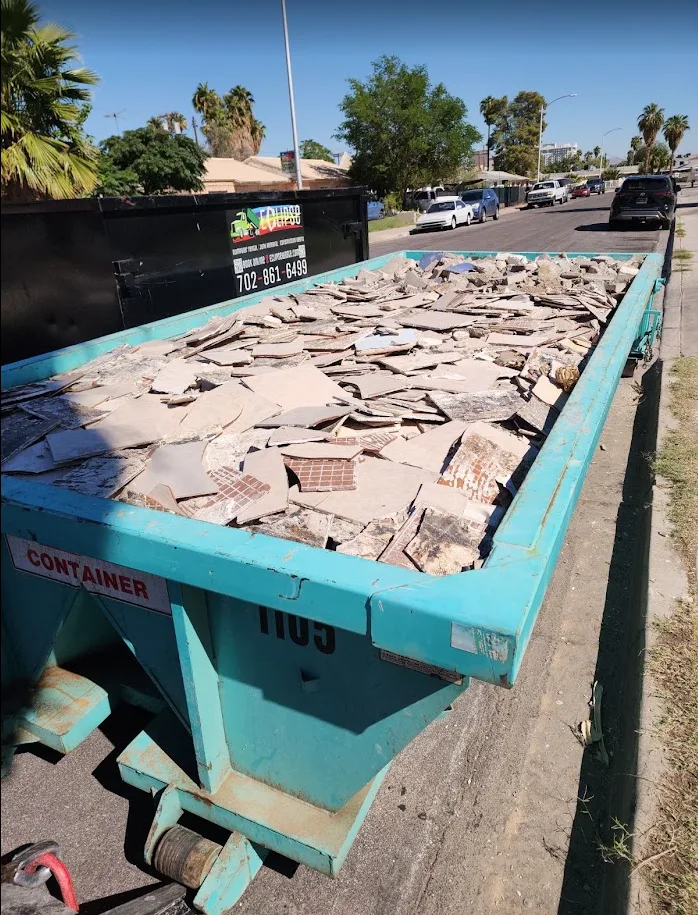
Every dumpster rental includes a weight allowance. Heavy materials such as roofing shingles, concrete, tile, and dirt can quickly push a load over the limit. Exceeding the weight cap typically results in overage fees charged per additional ton. Understanding the weight impact of your materials is just as important as estimating volume.
Delivery and Pickup Location Factors
Access and placement can also influence pricing. Driveway placement is usually straightforward, while street placement may require additional coordination or permits. Tight access, long driveways, or special placement needs can affect delivery logistics and cost.
Tips for Staying on Budget
To keep dumpster rental costs predictable, choose the right size, avoid prohibited materials, stay within weight limits, and schedule pickup promptly once your project is complete. Precise planning upfront is the best way to prevent unexpected charges.
FAQs About Residential Dumpster Rentals in Las Vegas
How long can I keep a dumpster at my home?
Most residential dumpster rentals include a standard rental period that works for typical cleanouts and renovation projects. If your project runs longer than expected, extensions are often available for an additional daily fee. Planning your timeline helps avoid unnecessary charges.
Do I need a permit for a residential dumpster?
A permit is usually not required when a dumpster is placed on a private driveway. If the dumpster needs to be placed on a public street or sidewalk, a temporary permit may be required, depending on the location and duration. HOA rules may also apply.
What happens if I exceed the weight limit?
Exceeding the included weight limit typically results in overage fees based on the additional tonnage. Heavy materials such as roofing shingles, tile, concrete, or dirt can quickly increase weight, so selecting the right size and understanding material limits are essential.
Can a dumpster damage my driveway?
Dumpsters are designed for residential placement, but a fully loaded container can be heavy. Using plywood or boards under the wheels can help protect concrete or asphalt surfaces and reduce the risk of cosmetic damage.
Are same-day rentals available in Las Vegas?
Same-day or next-day dumpster delivery is often available, depending on availability and demand. Scheduling as early as possible improves the chances of securing fast delivery for time-sensitive projects.
Schedule Your Dumpster Rental in Las Vegas Today
Whether you are planning a renovation, cleanout, or landscaping project, renting the right dumpster can keep the job moving efficiently. Eclipse Waste Management offers residential dumpster rentals for homeowners seeking upfront pricing, reliable service, and local support. Connect with us to schedule your dumpster rental today.